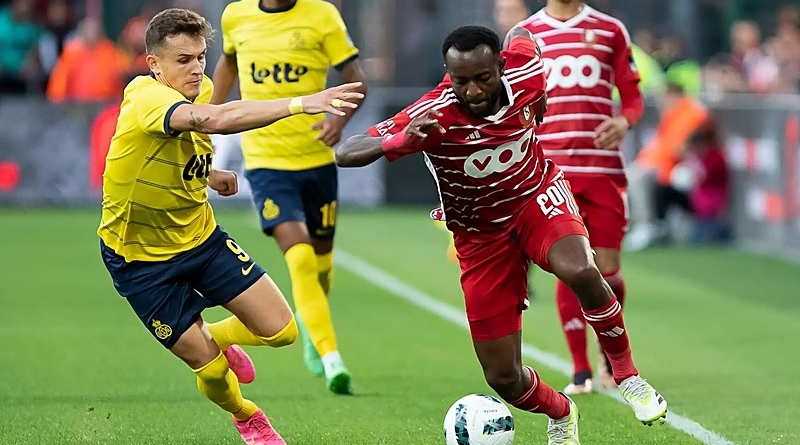
What Position Is LB in Football? Role and Responsibilities of a Left Back
In modern football, every position has its own role, and LB is one of the most important positions in the defensive line.
So, what position is LB in football, and what qualities does a player in this role need? From defending the left flank to pushing forward to support attacks, the left back has an increasingly important influence on how a team operates.
Those who regularly follow Socolive TV or look for information through platforms such as tructuyenbongda will often come across the term LB in team lineups.
What Position Is LB in Football?
LB stands for “Left Back,” referring to the left-back position. This player usually operates on the left flank in a four-man defensive line.
The LB plays to the left of the two centre-backs and is primarily responsible for protecting the flank and preventing the opposition’s right-sided attackers from creating danger.
In a 4-3-3 or 4-2-3-1 formation, the LB generally starts deep but can push forward when the team has possession.
According to tactical principles, a left back must be able to defend one-on-one, cover a wide area, pass accurately, and make overlapping runs.
The Main Responsibilities of an LB
To better understand what the LB position is in football, it is important to look at the responsibilities this player takes on during a match.
The first and most important task is defending. The LB must track the opposition’s winger or wide forward, prevent them from advancing down the flank, and stop crosses from reaching the penalty area.
When the ball moves to the opposite flank, the LB cannot simply remain in place.
The player must move inward to maintain defensive distance with the centre-backs while staying ready to support if the opposition switches the direction of attack.
Positioning and reading the game therefore play a crucial role.
In addition, the LB is also involved in building play from the back. When the team has possession, the full-back can stretch the formation, receive the ball on the flank, and pass to a midfielder or winger. S
ome modern systems even require the LB to move into central areas to provide an additional player in midfield.
Defensive Ability of an LB
One-on-one defending is a fundamental skill that every left back needs. When facing a fast winger, the LB must maintain an appropriate distance, prevent the opponent from getting past, and avoid committing to a challenge too early.
Along with tackling ability, the player must know how to force the opponent toward the touchline. This narrows the opponent’s angle of movement and gives the LB an advantage when stopping the attack.
A good LB must also know how to support the centre-backs. If a centre-back has to leave their position to challenge a forward, the left back can move inside to cover the space left behind.
Football coaching principles also emphasise maintaining defensive structure, providing cover, and moving in accordance with the direction of the ball.
An LB’s Ability to Support Attacks
Modern football no longer requires LBs to stay deep solely to defend. Excellent full-backs regularly push forward, provide width to the formation, and offer additional attacking options.
When the winger cuts inside, the LB can overlap to stretch the defence.
If the teammate keeps possession, the full-back can receive the pass and deliver a cross or cut the ball back into a dangerous area.
This is also why full-backs often play a prominent role in matches involving major clubs. Fans can follow the lịch thi đấu c1 on Soco Live TV to observe how some of Europe’s leading LBs operate in highly competitive matches.
Qualities Needed by a Good LB
A quality left back needs good speed because they must constantly transition between defensive and attacking phases.
During a match, an LB may make a sprint forward and then immediately have to track back to stop a counterattack.
Stamina is also particularly important. Unlike centre-backs, who generally operate within a relatively defined area, an LB needs to cover almost the entire length of the left flank.
A player with a strong physical foundation can maintain their defensive and attacking contributions throughout the 90 minutes.
Beyond physical attributes, ball-handling skills are becoming increasingly important. An LB needs to pass well, control the ball under pressure, and make quick decisions.
Training requirements for the position commonly include speed, stamina, one-on-one defending, crossing, and passing ability.
LB in Modern Football Tactics
While full-backs previously operated mainly close to the touchline, modern football has introduced many new variations.
One of them is the inverted full-back, where the full-back moves into central areas when the team has possession.
This approach gives the team an additional player in midfield, improving possession control and helping protect against counterattacks.
However, the player needs excellent passing skills, tactical awareness, and spatial awareness.
In some systems using three centre-backs, the player operating on the left can transition into a wing-back role.
This significantly expands their area of operation and places greater demands on speed and stamina.
This is why viewers watching Soco Live may notice that the same player can have a different role depending on the tactical formation.
Distinguishing LB from LWB and CB
LB and LWB both operate on the left side but differ significantly. An LB usually plays in a four-defender system and has clearer defensive responsibilities.
An LWB, by contrast, typically plays in a three-centre-back formation, starts higher up the pitch, and participates more often in attacks.
CB refers to the centre-back position, which operates mainly in the middle of the defensive line. This player is generally responsible for competing with forwards, defending aerial balls, and maintaining the defensive structure.
So, when learning what position LB is in football, readers should not simply think of it as a “defender on the left.”
A modern LB must balance defending, building play, supporting attacks, and transitioning between phases.
The Role of an LB in Major Matches
In high-level matches, the full-back position often comes under significant pressure. A single mistake in marking or an untimely forward run can leave the team exposed and lead to serious consequences.
Conversely, a full-back with strong game awareness can make a difference through interceptions, line-breaking passes, or unexpected attacking runs.
For football fans, following the lịch thi đấu C1 and watching how top teams use their LBs is a great way to deepen your tactical understanding.
Socolive Tivi content also gives fans additional perspectives on developments during matches, while SocoliveTV is a familiar name used by many people when searching for online football content.
Conclusion
From the analysis above, what position is LB in football is not simply a question with a one-dimensional answer.
LB stands for left back, but in modern football, the position has evolved into a multifunctional role that includes defending, creating chances, and contributing to the team’s overall build-up play.
By regularly watching tructuyenbongda, fans can easily recognise the importance of full-backs in major matches.
Keeping up with the lịch thi đấu C1 also helps viewers avoid missing performances from some of the leading LBs.
In addition, Socolive continually provides notable football information, making it easier to follow matches and learn more about tactical de