List of Champions League Winners Over the Years
The list of Champions League winners over the years provides the clearest picture of how European football has evolved over more than seven decades.
From Real Madrid’s dominance in the competition’s early seasons to the dynasties of Liverpool, Milan, Bayern, and Barcelona, and the rise of Manchester City and PSG, Europe’s most prestigious club trophy has seen different cycles of power.
List of Champions League winners throughout history
For those who regularly follow Vebo Link, organizing the winners by period makes it easier to understand the identity, strength, and stature of each major force in European football.
1950–1960: Real Madrid usher in an era of dominance
The European Cup was established in the 1955/56 season, and Real Madrid immediately became the first club to have their name engraved on the trophy.
The Spanish giants went on to win the next four editions, creating a run of five consecutive titles from 1956 to 1960.
This remains a remarkable achievement in the competition’s history, demonstrating Real Madrid’s overwhelming superiority during its early years.
This dominance was not simply the result of the club’s reputation; it also reflected the quality of its players, organizational approach, and competitive mentality, with a squad featuring several exceptional stars.
When checking today’s football results, fans often focus on current developments, but the history of the European Cup shows that a club’s true strength is established through its ability to remain at the top over multiple seasons.
1960–1970: Italy and Scotland make their mark
As the 1960s began, the balance of power started to shift. Benfica won two consecutive titles in 1961 and 1962, before AC Milan lifted the trophy in 1963. Inter Milan then secured two titles in 1964 and 1965 under Helenio Herrera.
Celtic made history in 1967 by becoming the first Scottish club to win the competition. A year later, Matt Busby’s Manchester United triumphed, taking English football to the top of Europe for the first time.
This period showed that the European Cup was becoming a stage for different tactical philosophies rather than remaining a competition dominated by a handful of Spanish clubs.
1970–1990: The era of tactical dynasties
The 1970s began with Feyenoord’s title triumph in 1970, followed by Ajax establishing a dynasty with three consecutive victories from 1971 to 1973.
Bayern Munich also completed a hat-trick of titles between 1974 and 1976, while Liverpool reached the summit of European football four times between 1977 and 1984.
Notably, Nottingham Forest won the trophy in consecutive years, 1979 and 1980, despite not being a traditional European powerhouse.
Aston Villa continued English football’s success in 1982, while Hamburg, Juventus, Steaua București, and Porto also made their mark during the 1980s.
These achievements show that the list of Champions League winners over the years does not simply record the names of major clubs but also preserves stories of remarkable success.
For Vebo Link readers, this period is particularly notable for its tactical diversity.
Ajax represented Total Football, Bayern demonstrated organization and efficiency, Liverpool stood out for their intensity and ability to control matches, while Italian clubs built their reputations on disciplined defensive systems.
Champions from the 1990s to 2010
The turning point from Marseille to Barcelona
Marseille won the title in 1993, becoming the first French club to lift the trophy. After that, AC Milan, Ajax, Juventus, Borussia Dortmund, Real Madrid, Manchester United, Bayern Munich, Porto, Barcelona, and Inter Milan each wrote important chapters in the competition’s history.
This was also the period when the competition underwent a major transformation, changing its name from the European Cup to the UEFA Champions League from the 1992/93 season.
The new format expanded the tournament’s appeal and attracted more leading clubs.
UEFA recognizes Marseille as the first champions of the Champions League era, while Real Madrid has remained a prominent force in the competition’s history.
Barcelona stood out with title victories in 2009 and 2011 under Pep Guardiola. Manchester United won in 1999 and 2008, while Liverpool produced an iconic comeback in 2005.
Inter Milan claimed the title in 2010, completing a historic treble under José Mourinho.
When these achievements are compared with today’s football results on Về Bờ TV, the differences in context are significant.
Modern football features faster player turnover, more rapid tactical changes, and increasingly noticeable financial gaps between leagues.
2010–2020: Spanish dominance and the rise of English clubs
From 2010 to 2020, the Champions League witnessed several notable periods of dominance. Barcelona won in 2011, Chelsea in 2012, Bayern Munich in 2013, Real Madrid in 2014, and Barcelona again in 2015.
Real Madrid then entered one of the most glorious periods in the club’s history, winning three consecutive titles from 2016 to 2018.
This achievement made them the first club in the Champions League era to successfully defend their title across three consecutive seasons.
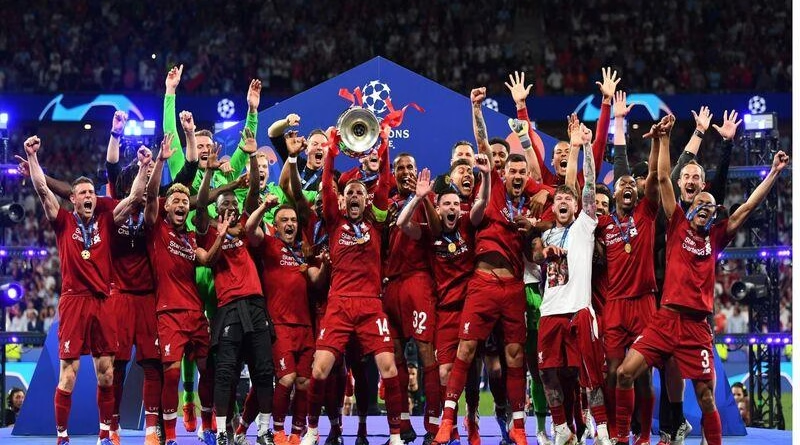
Liverpool ended that run by winning the trophy in 2019, before Bayern Munich triumphed in 2020. In terms of kết quả bóng đá hôm nay, Về Bờ TV fans can follow developments from one matchday to the next.
However, in a historical context, a dynasty is truly remarkable only when it sustains success across multiple consecutive seasons.
List of Champions League winners from 2020 to 2026
The new decade began with Chelsea winning the title in 2021, followed by Real Madrid in 2022 and Manchester City in 2023.
In particular, Manchester City’s triumph marked the club’s first-ever Champions League title, completing their journey to the top tier of European football.
Real Madrid added another title in 2024, bringing their total European Cup/Champions League victories to 15, well ahead of AC Milan’s seven.
Liverpool and Bayern Munich have six titles each, while Barcelona have won the competition five times.
PSG won the Champions League for the first time in the 2024/25 season. A year later, the French club defeated Arsenal in a penalty shootout in the 2025/26 final to successfully defend their title.
PSG became the second club in the Champions League era to win the competition in two consecutive seasons.
This represents a significant shift in the balance of power in European football. France previously celebrated Marseille’s triumph in 1993, but PSG has opened a new chapter by reaching the top of the continent in consecutive seasons.
For viewers of Vebo Link, this change shows that the Champions League is no longer a competition revolving solely around Real Madrid, Barcelona, Bayern, Milan, or English clubs.
Conclusion
Looking back at the list of Champions League winners over the years, it is clear that the competition’s history is a story of constantly changing cycles of dominance.
To date, Real Madrid remain at the top with 15 titles, but the emergence of Manchester City and PSG’s back-to-back Champions League triumphs show that the balance of power continues to evolve.
For those who follow Vebo TV, looking back at each period therefore offers more value than simply reading a list of winners: it helps explain why every generation of champions has left its own unique mark.